Jul 29, 2026
Corn Leafhoppers Impacted Corn Production in Northern Argentina
Author: Michael Cordonnier/Soybean & Corn Advisor, Inc.
Farmers in northern Argentina are reporting significant higher damage from corn leafhoppers (Dalbulus maidis) in their 2025/26 corn production compared to last year and they are worried that the situation may get worse during the 2026/27 growing season.
The key to future insect populations will be frost during the Argentine winter because the insect has low tolerance to cold weather, and during the off-season, it seeks refuge in winter crops that serve as a "green bridge".
In northern Argentina, most of the corn planting is late, beginning in January. This leaves the crop more venerable to infestation as the insect migrates from other regions of the country. Scientists are recommending that farmers in northern Argentina plant their corn in the most concentrated window possible between January 1st to the 10th. Control with insecticides will only succeed if populations are low. If insecticides are used, it is most desirable to do it in a coordinated and regional way, rather than just field by field.
Farmers also need to plant hybrids with more tolerance to the insect and to eliminate any volunteer corn that may have germinated prior to planting, because the volunteer corn servs as the "green bridge" between seasons.
The first widespread experience with this plague was during the 2023/24 growing season when many corn fields throughout Argentina were decimated by the insect which transmits a virus to the corn plant. Later planted corn was more impacted that early planted corn. Farmers and scientists have learned a lot since on how to best control the insect, but control is still highly dependent on insect populations and environmental factors.
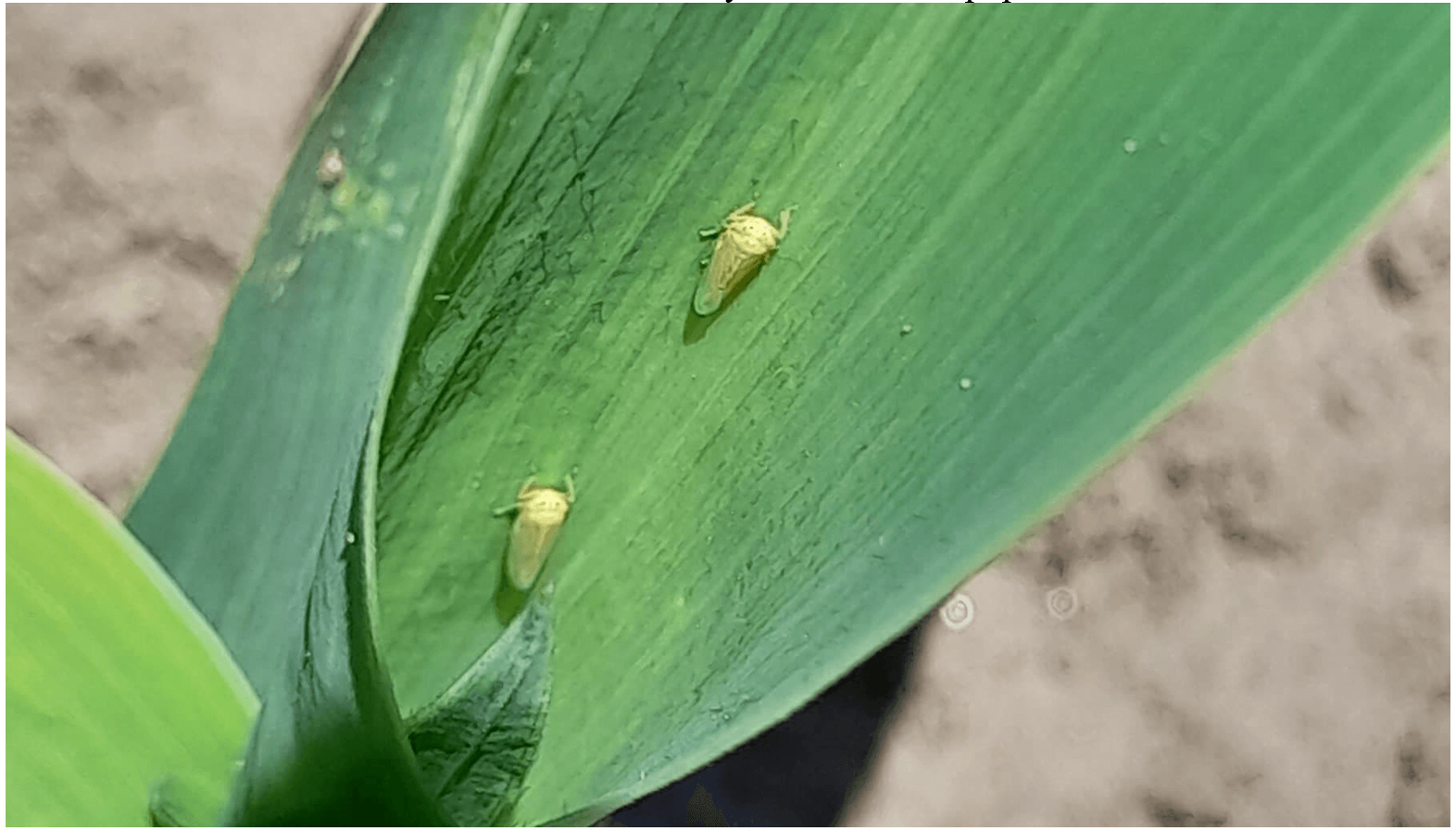
Below is a picture of corn leafhoppers (Dalbulus maidis) on corn in northern Argentina during the 2025/26 season. Photo is courtesy of InfoCampo.